after the uncanny
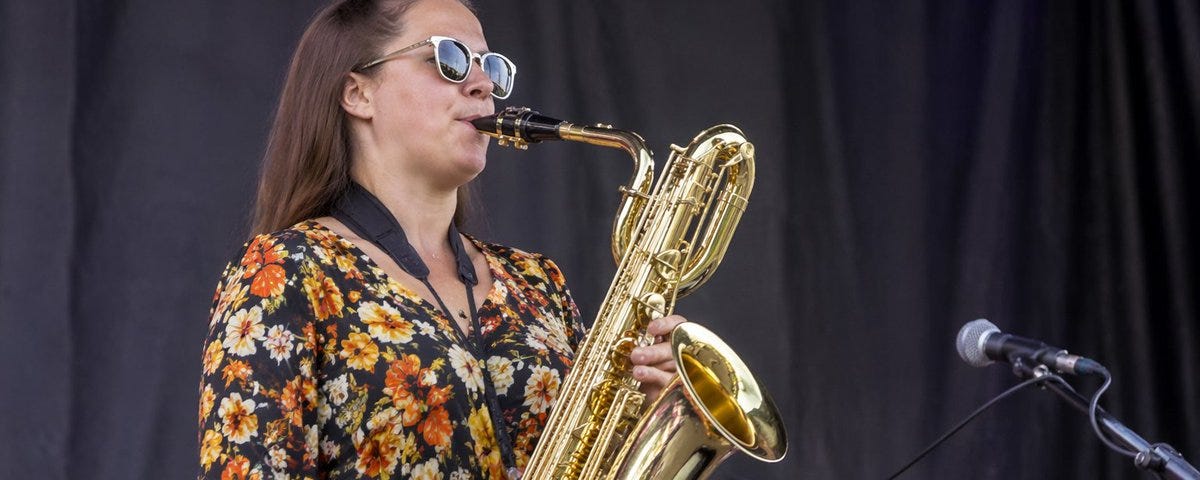
imagegen 2.0 by @OpenAI was released to the public today. i was part of the chatgpt pro community early testing group, and i see this new model as a real step change in generative image models. during the livestream, openai engineers hinted at the images looking “normal,” and after testing it across many use cases, i agree.
the language around the uncanny comes out of masahiro mori’s 1970 “uncanny valley” essay, first in robotics, then later in computer graphics and digital-human animation whenever something looked almost human but not fully resolved. by the time gans and then diffusion models entered public use, “uncanny” had become the common way to describe the faces, eyes, hands, and other human details that still gave synthetic images away.
example 1
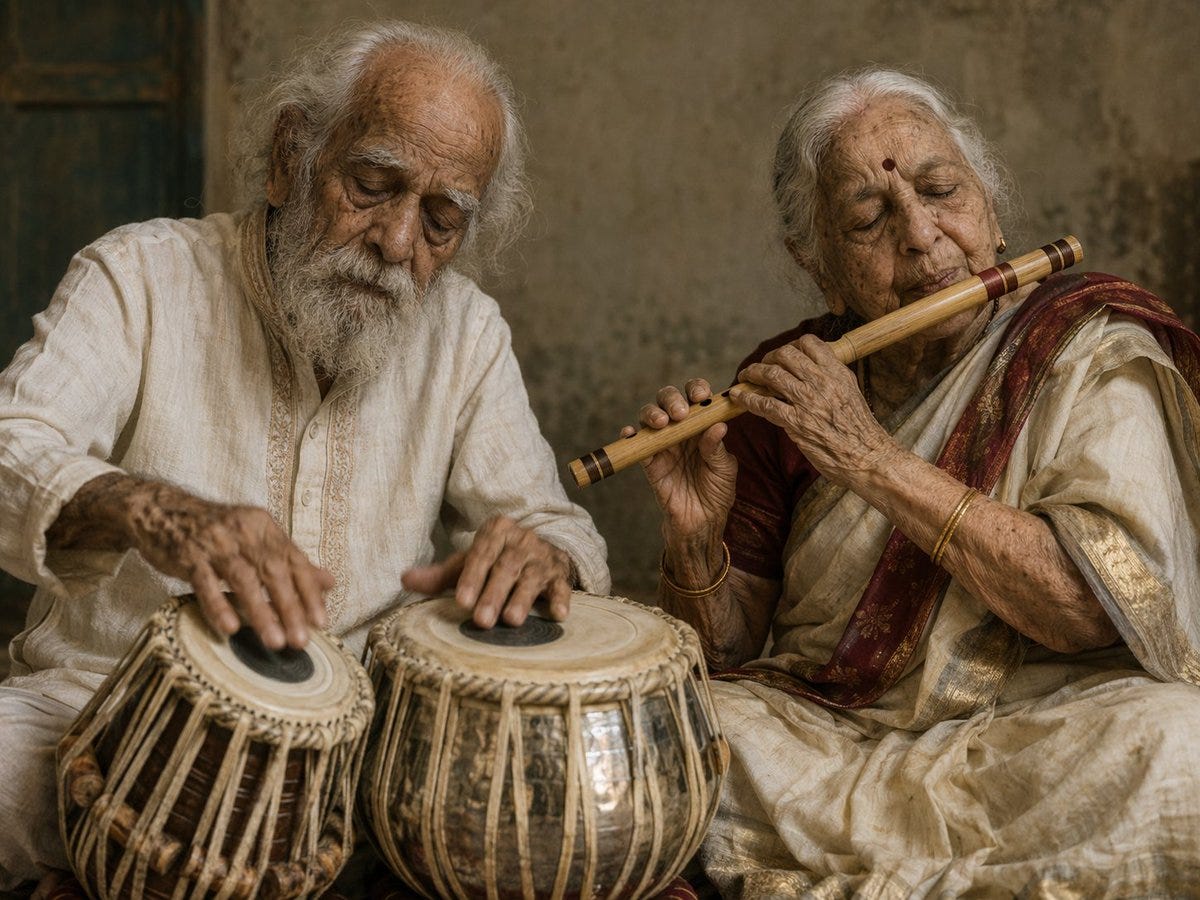
here both humans and instruments look “uncanny”.
vs. when you add the word “photorealistic”
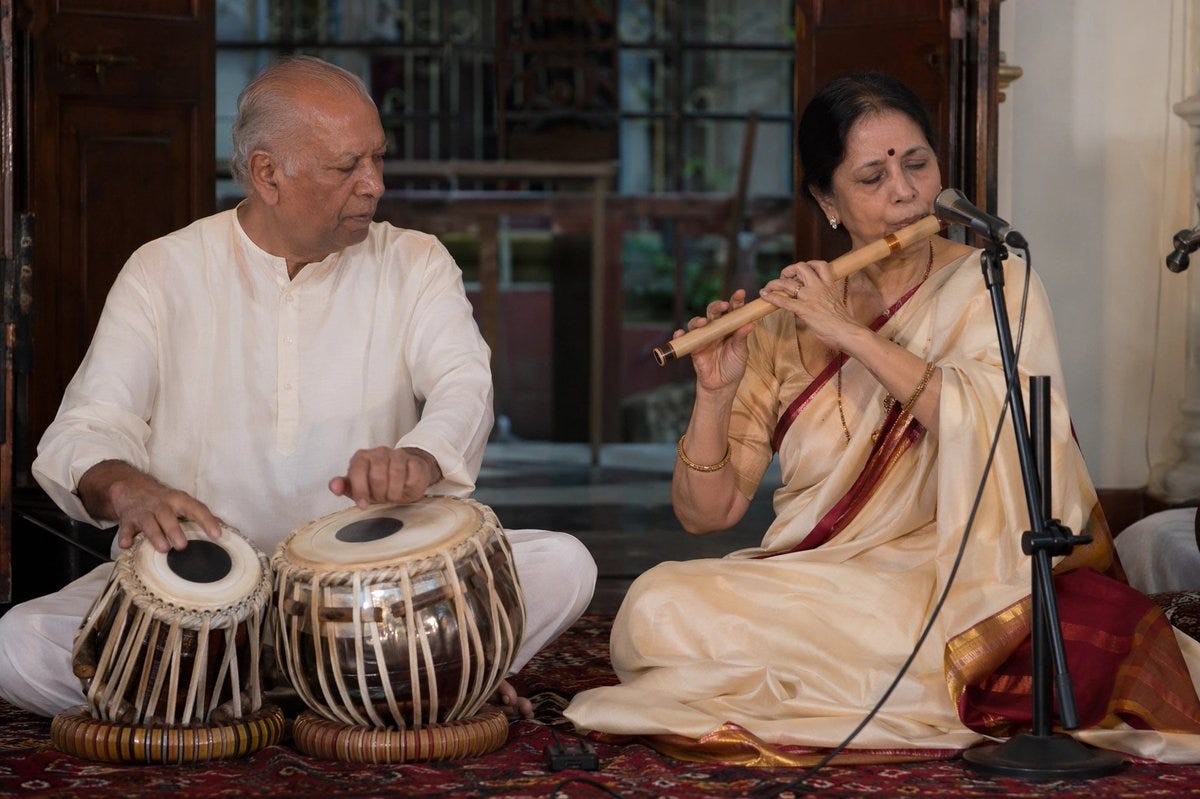
same model as above, with added “photorealistic” term to prompt.
both images (shoutout to @dibyayB for help with “photorealism“ unlock) were made with the same model, and you can see the difference that adding the term photorealistic makes in the output. in the first image, the faces, hands, skin, and textures still give away the uncanniness. for musicians, though, this becomes more nuanced, almost a turing test of its own, in hand positioning, hand shape, and in the points where instruments meet the body, through the hands, feet, or lips.
example 2
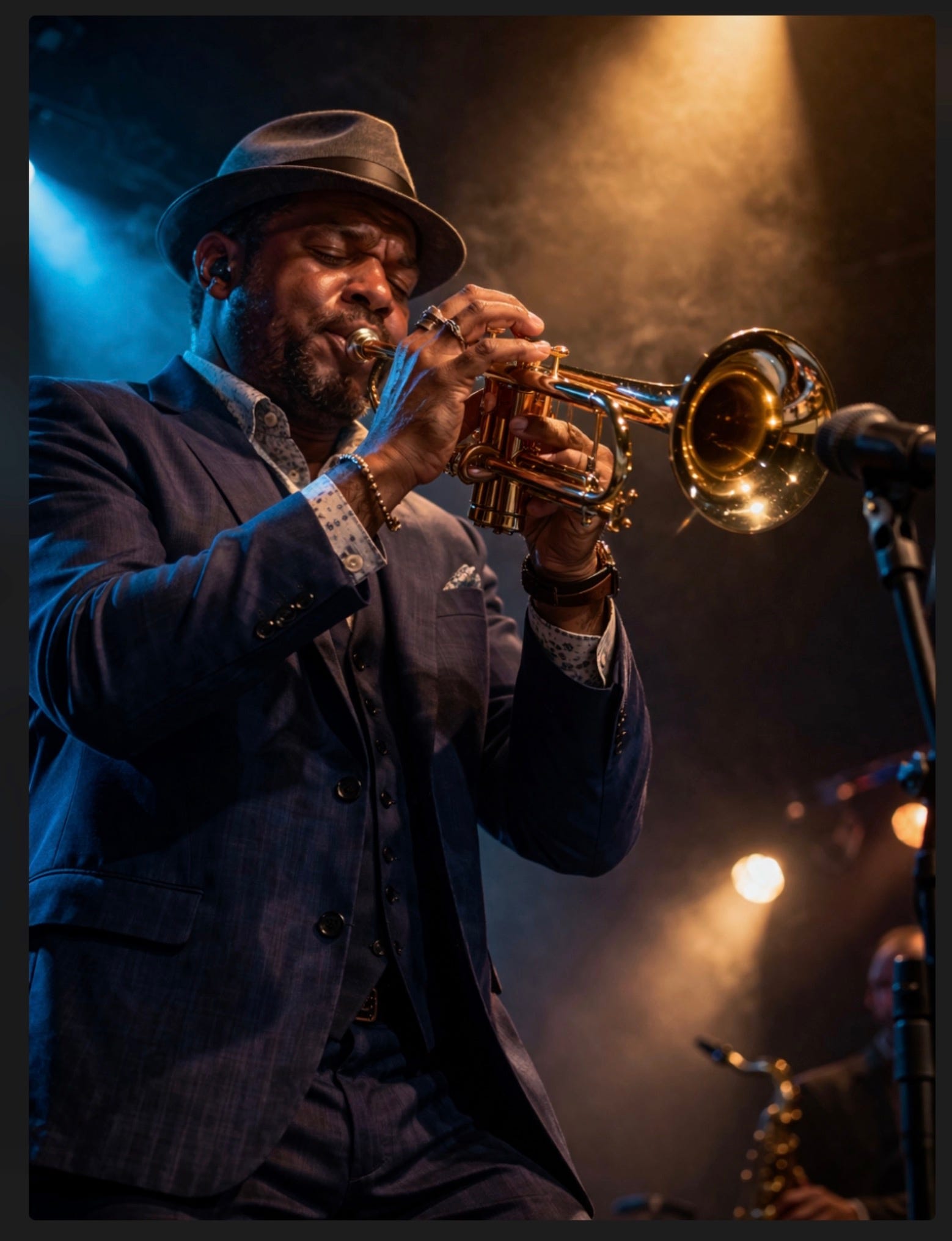
imagegen 1.5 - missing left fingers, the unbelievable embouchure, and even the inverted tenor saxophone in the background, with the mouthpiece turned 180 degrees in the wrong direction.
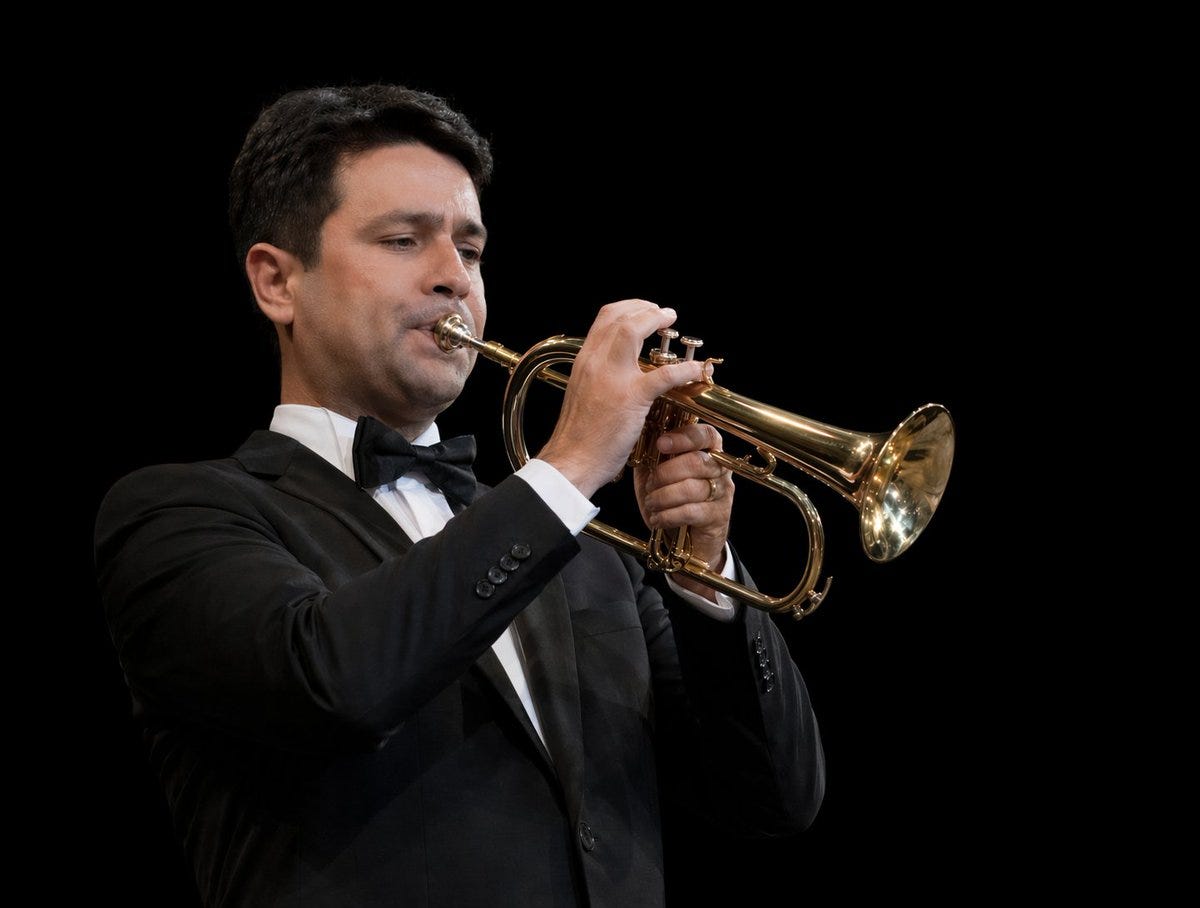
imagegen 2.0 - much improved on embouchure muscles, hand positioning, skin tone, and overall “normalness”
another almost impossible task has been generating a believable drum set that’s mic’d correctly, with properly routed cables and no visible distortion.
example 3
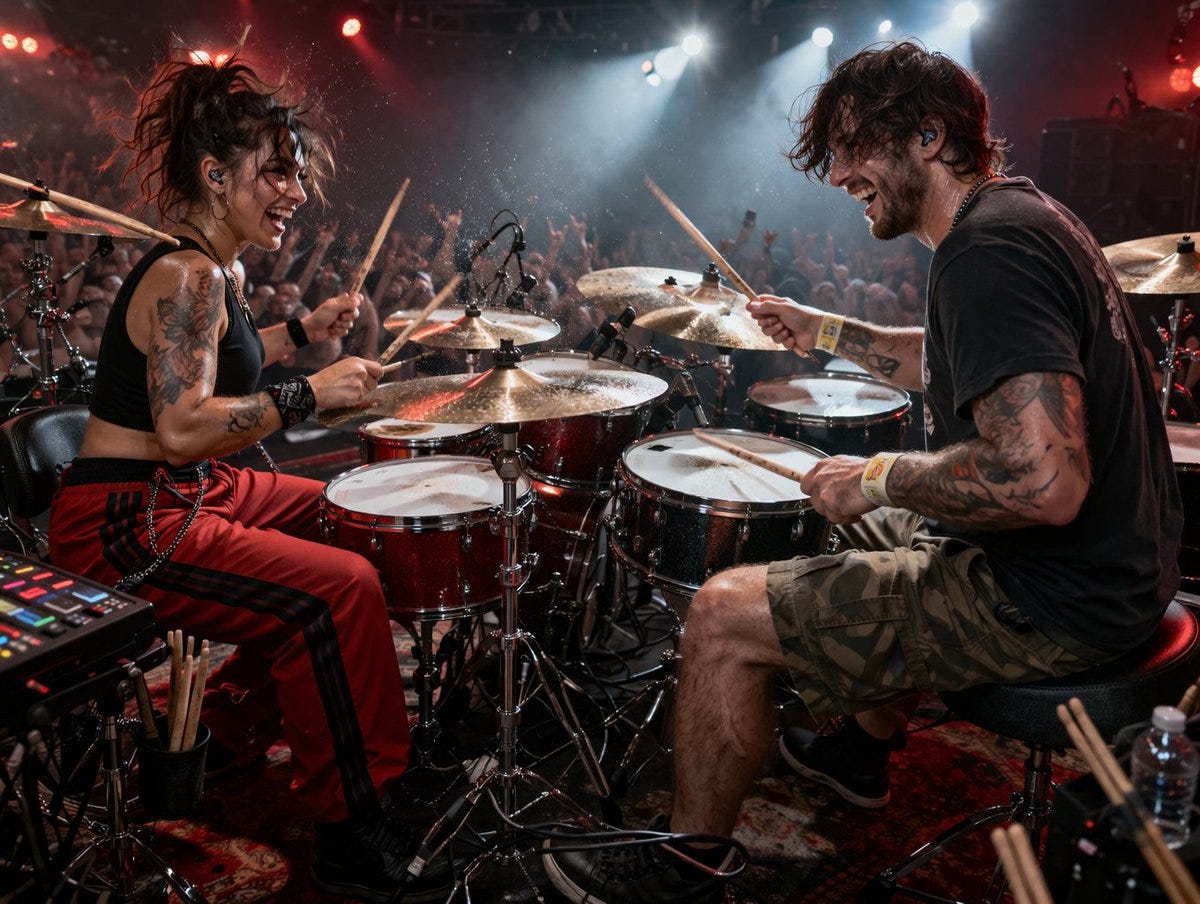
imagegen 1.5 - there are floating cymbals, extra pieces of microphones, drum stands, drum sticks, and missing key elements like kick drums.
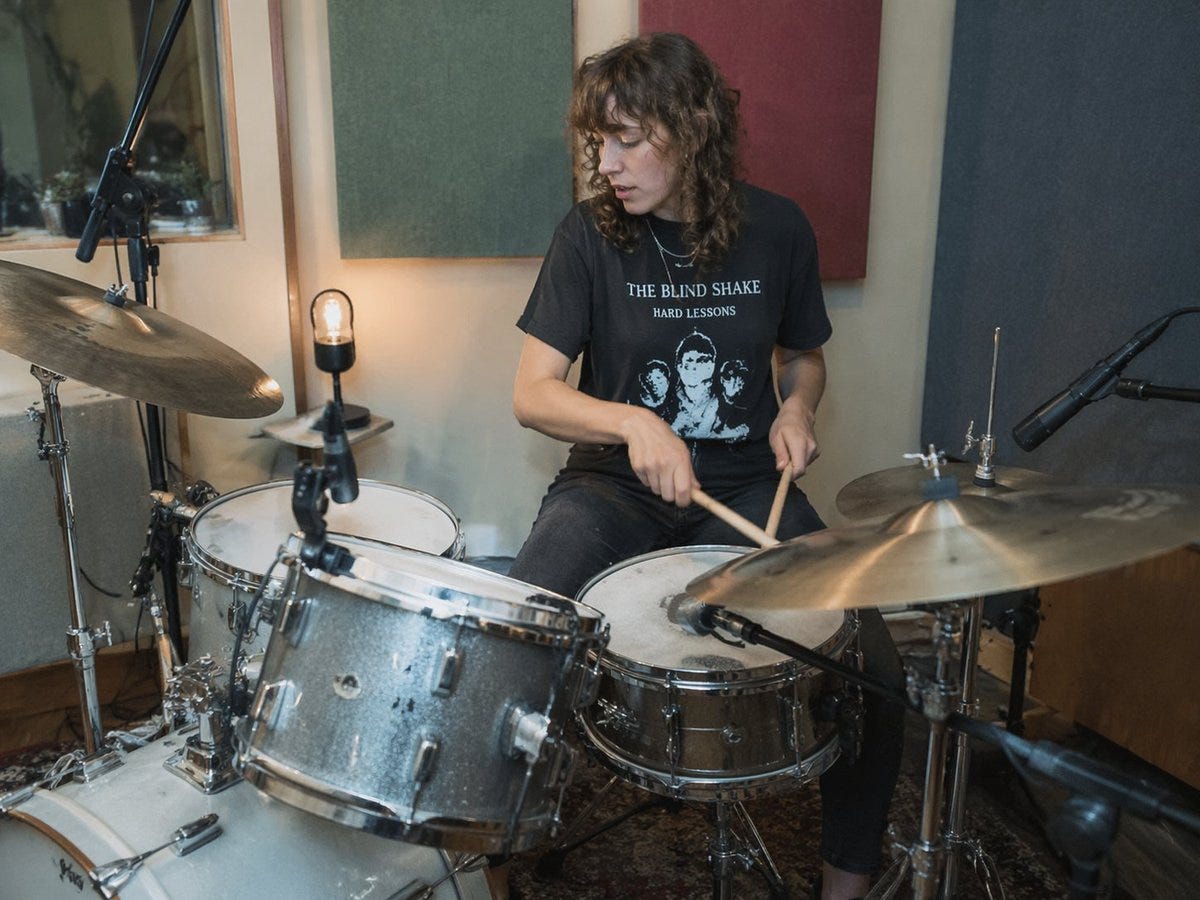
imagegen 2.0 - correct mics, mic cables, and mic positioning, correct drum set parts, hardware, and even correct hand positioning for holding drumsticks.
for me, as an artist, as a tool becomes more and more realistic, the opportunity for nuanced, discrete abstraction accelerates. a great test for this is surrealism. there is an uncomfortable oddity to surrealism that i do not feel was captured in earlier models. even the surrealism looked somehow uncanny. here, these images express strangeness with much higher fidelity.
example 4
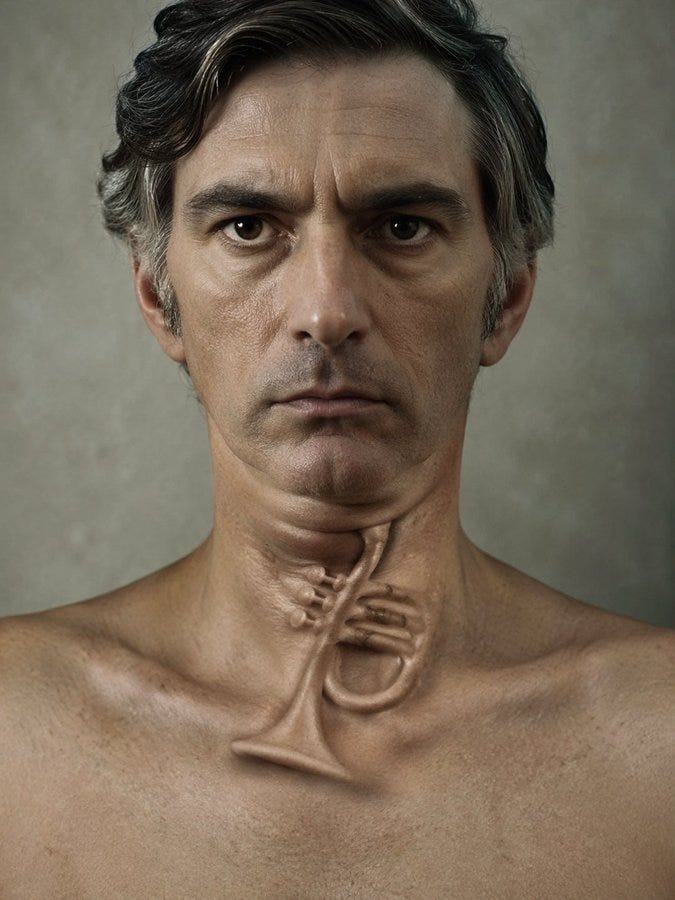
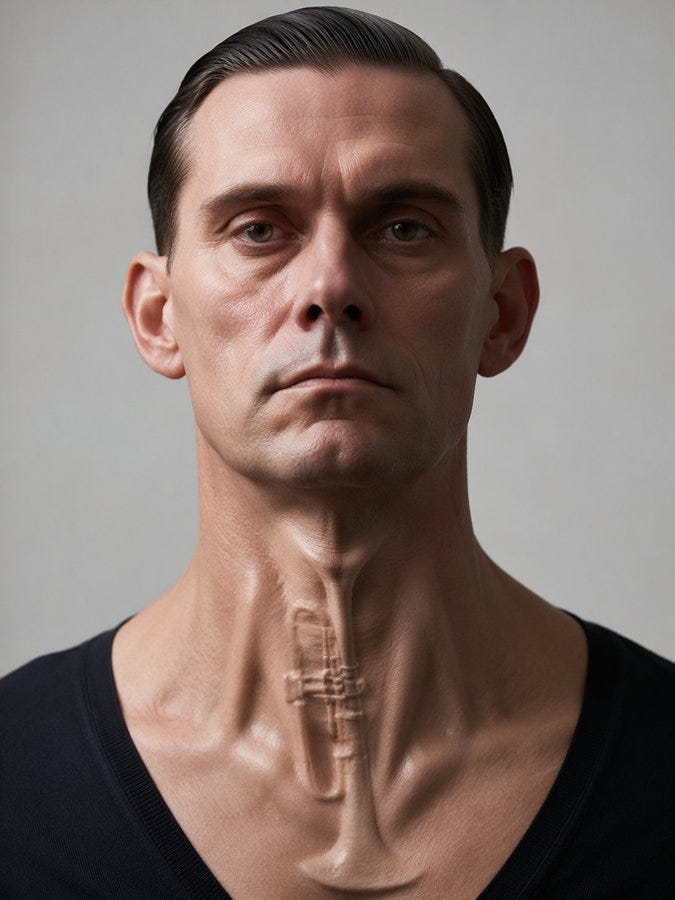
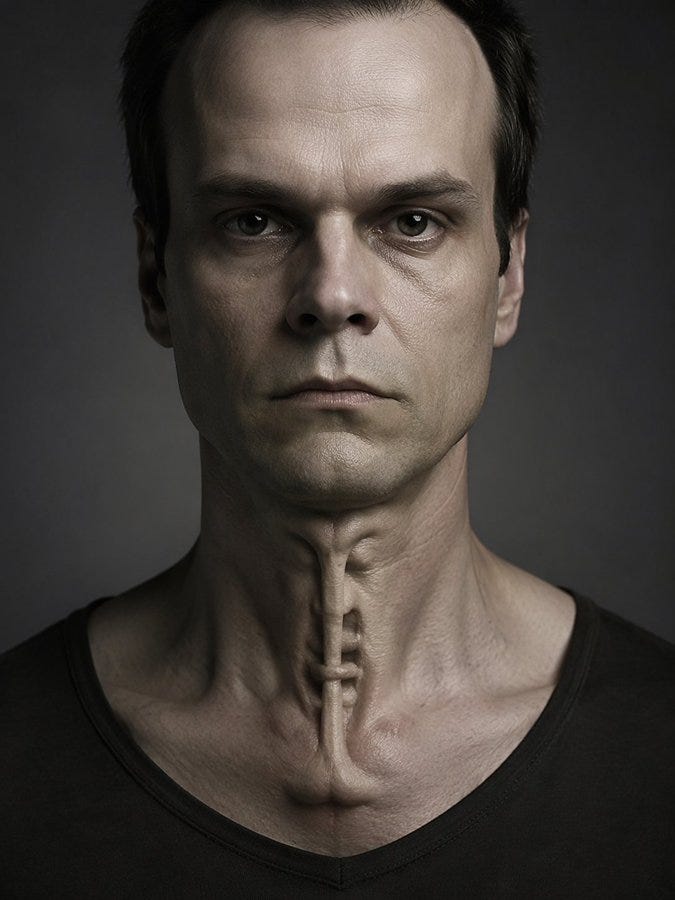
imagegen 2 - man swallowing trumpet.
although this image model is such a significant leap forward, of course there is still distortion to be found and improvements to be made. some notable examples include things like keyboards or even notes on a staff.i look forward to future models where i can generate images of musical concepts to share with students.
example 5
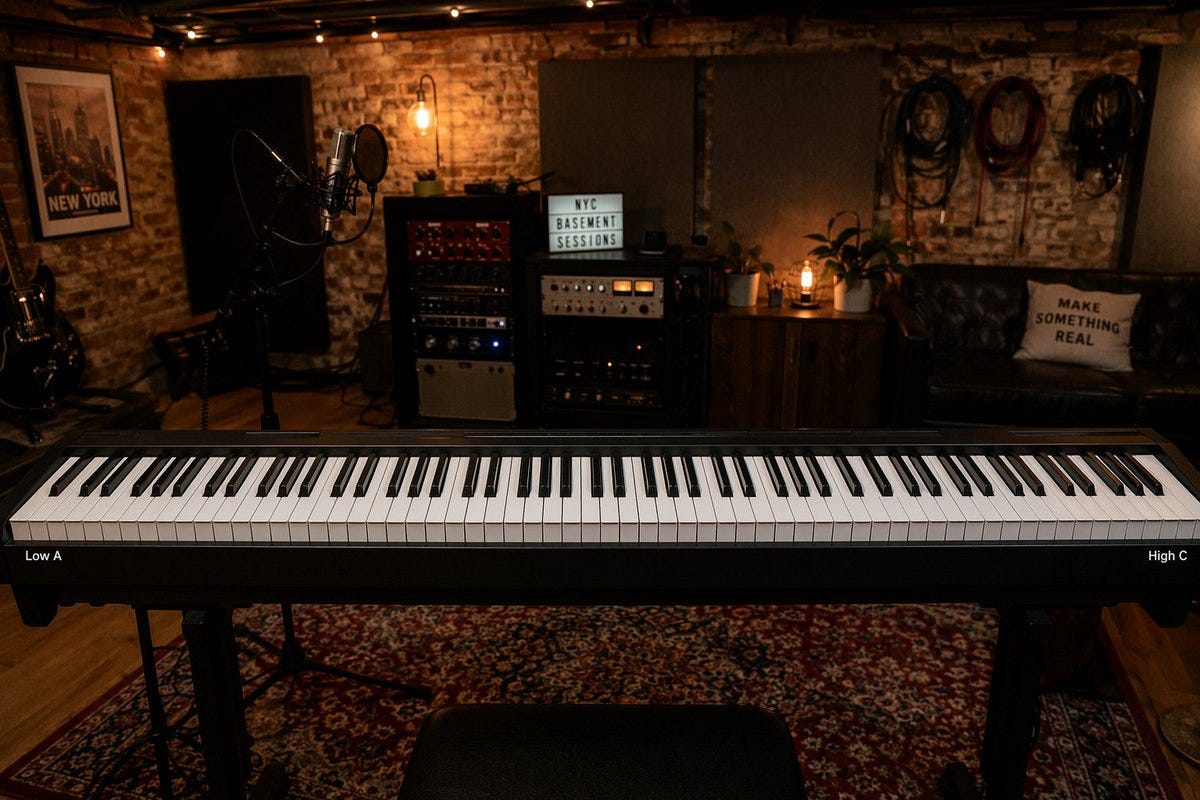
too many octaves.
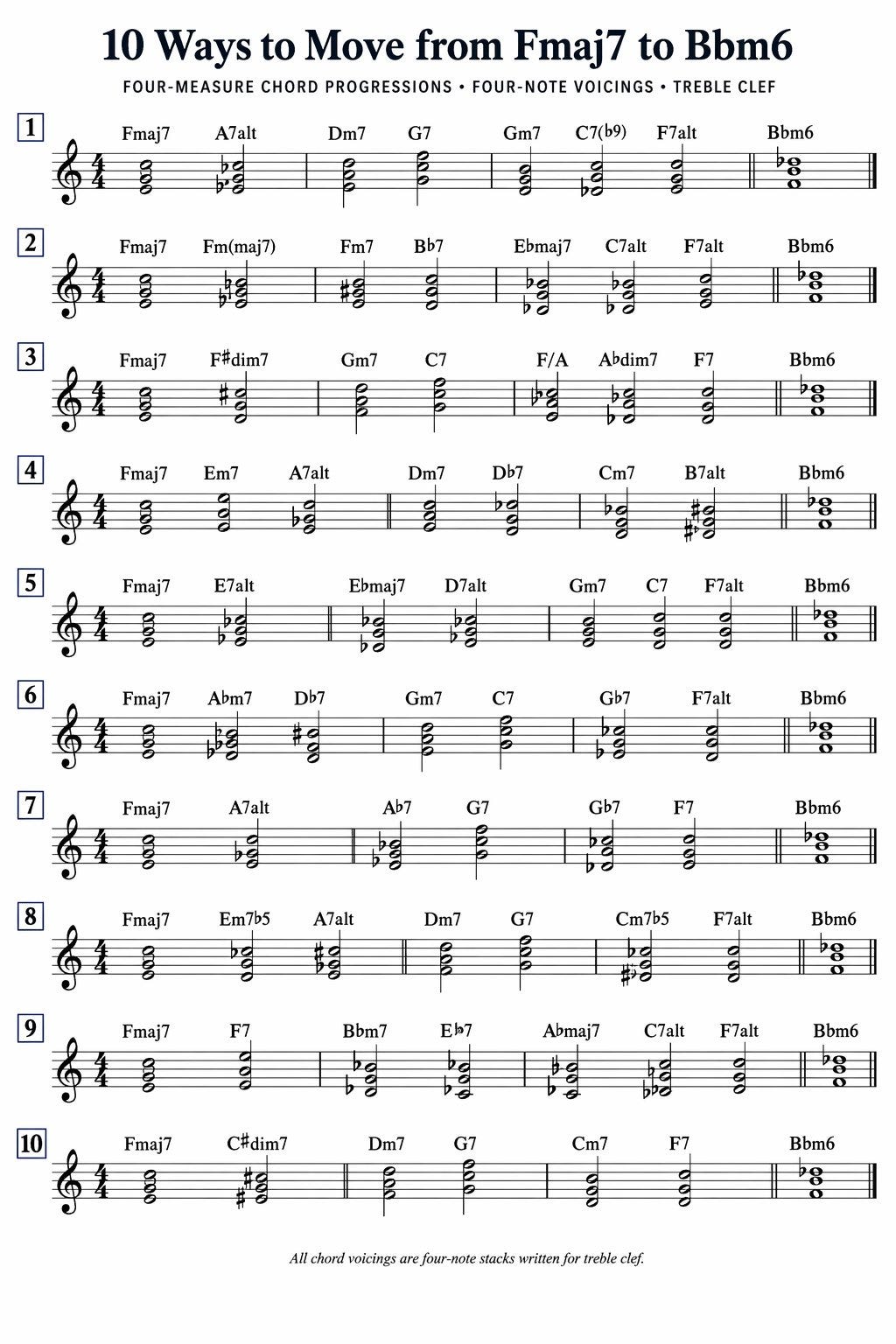
great solutions in harmonic content, still missing a bit of accuracy when placing notes on staves.
as i’m writing this right now, i’m using imagegen 2.0 in one of my favorite use cases so far. i’m currently working on an application and i gave the model these three images to and requested advice on ui and ux improvements and ideas. more than anything, the outputs are productive and useful and only getting better. i can now feed these back into codex and continue to iterate.
example 6
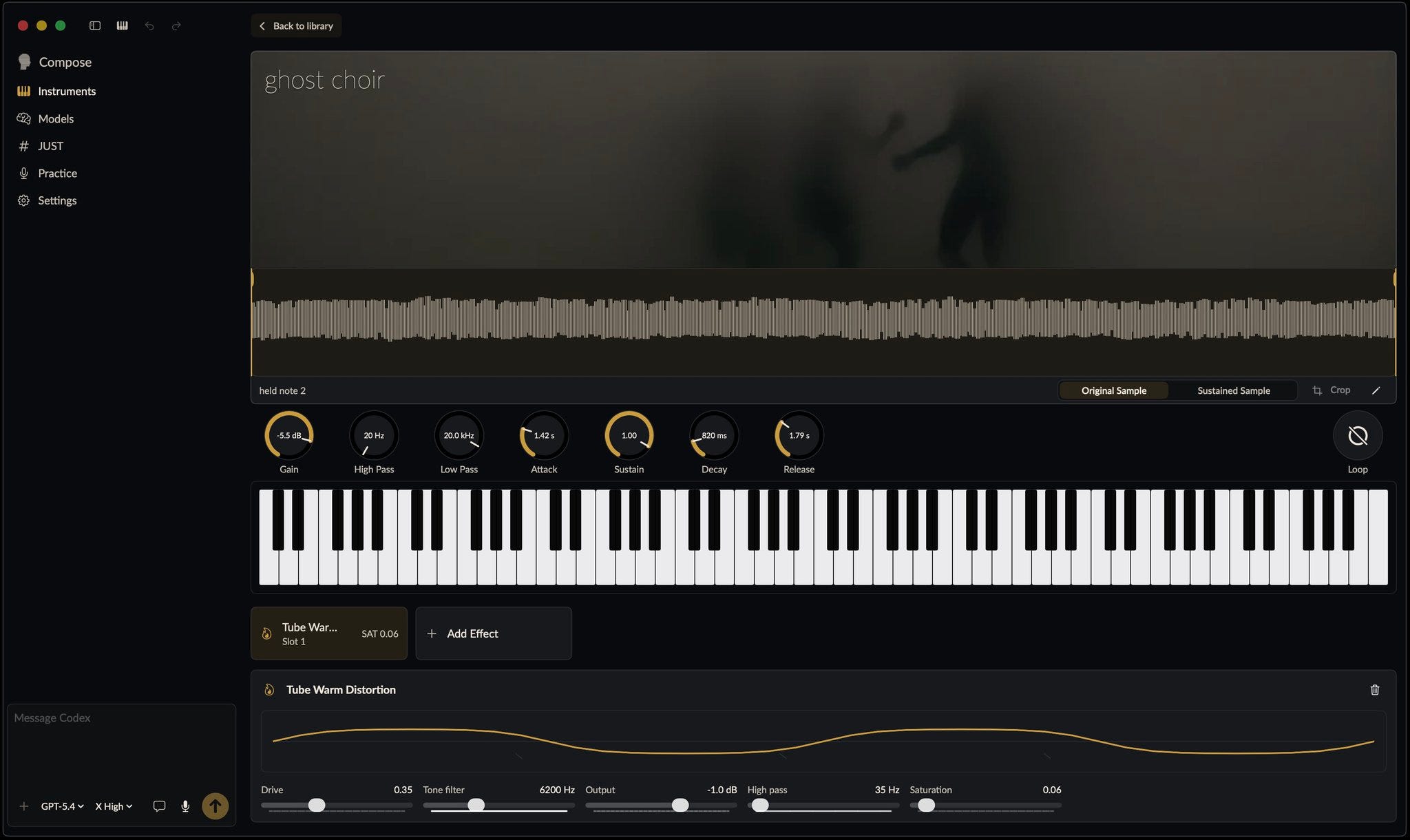
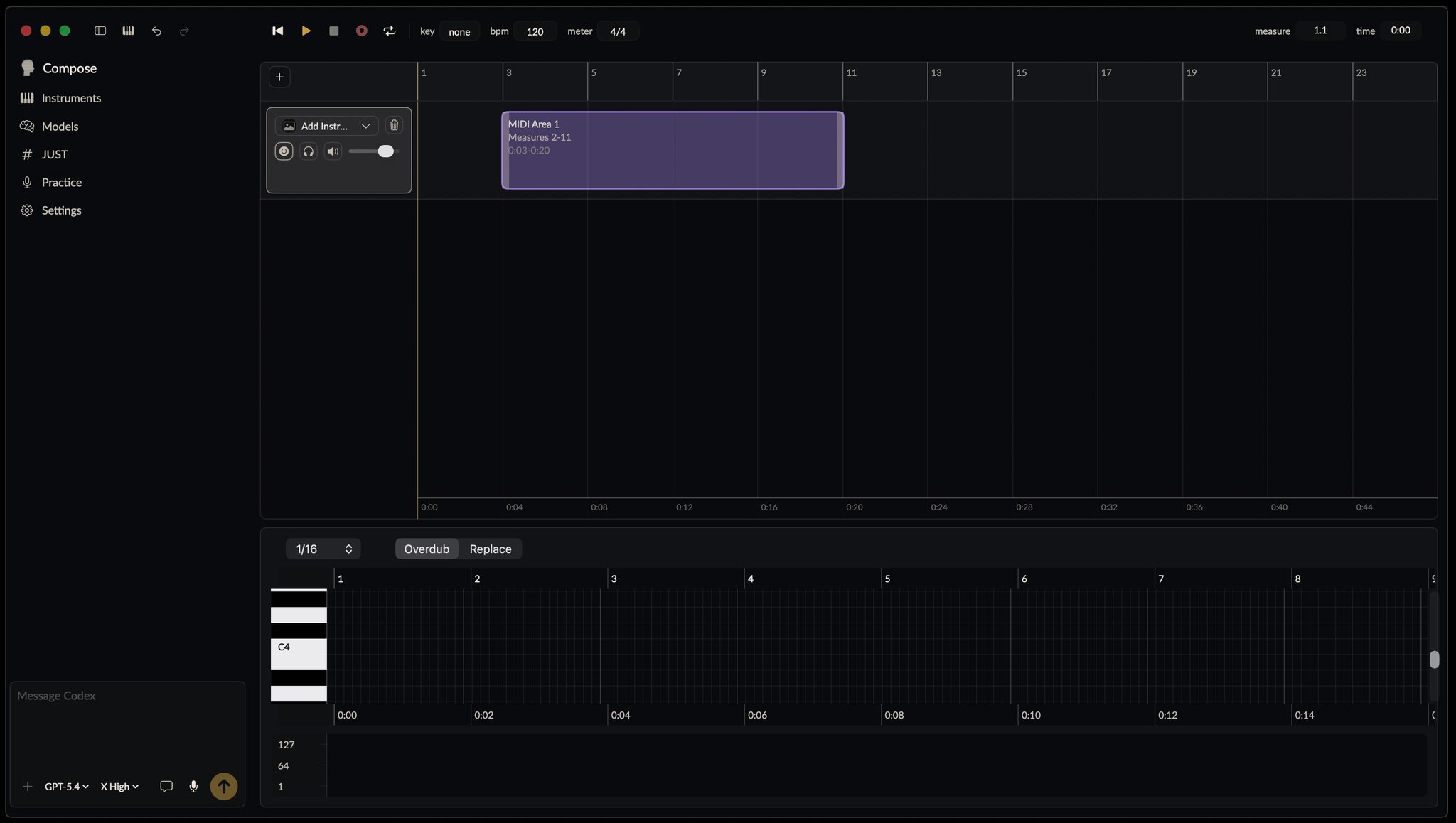
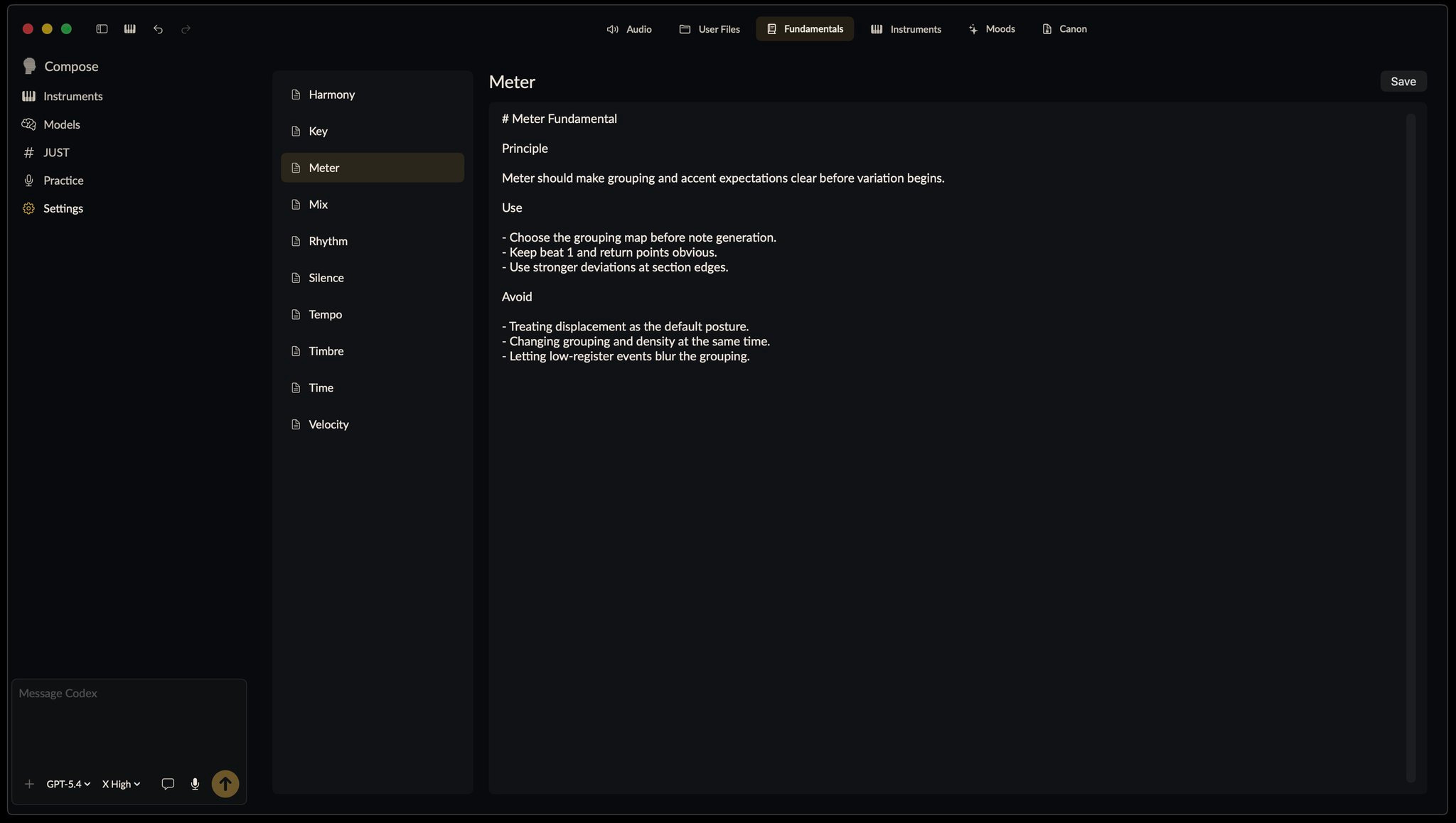
screenshots of the current ui.
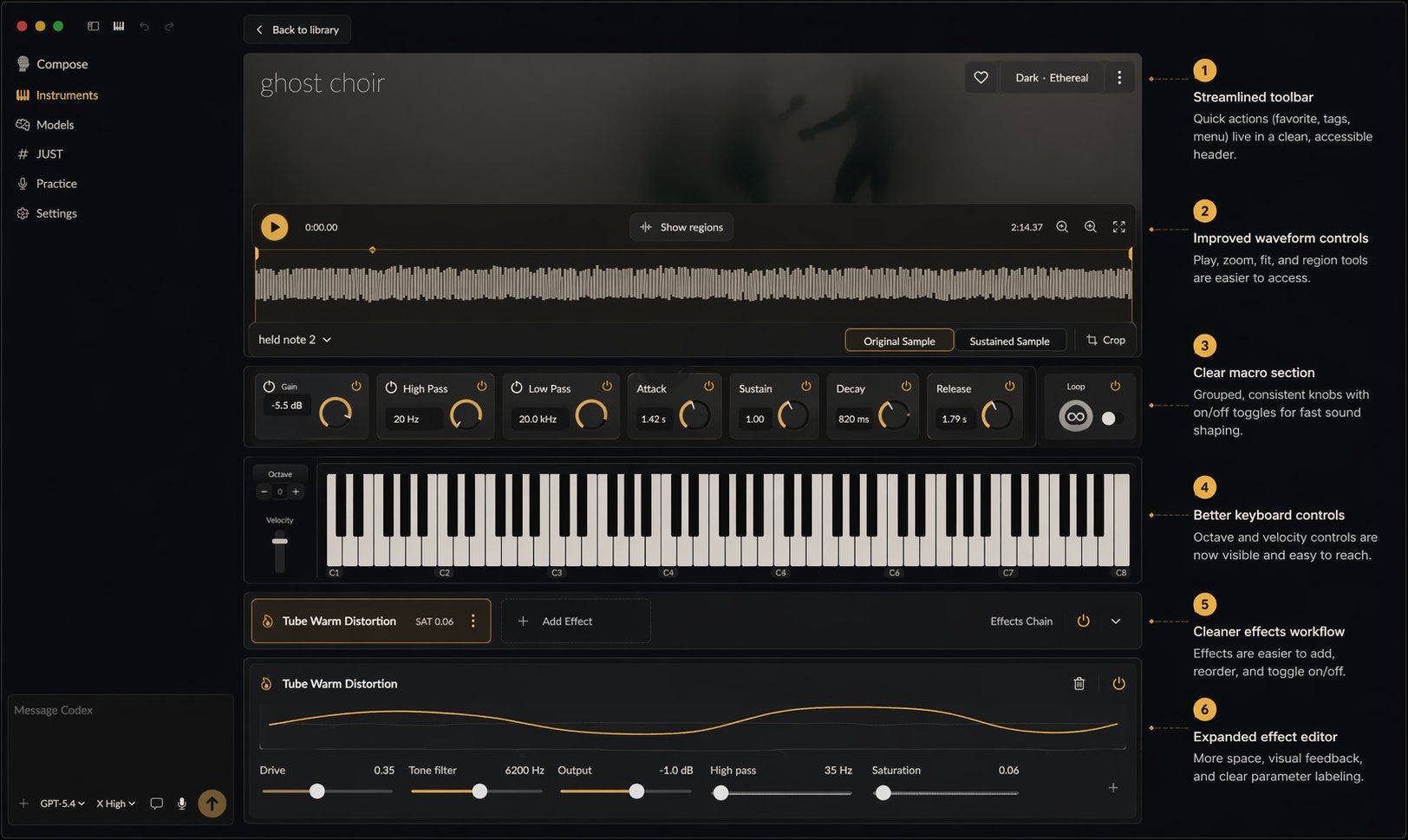
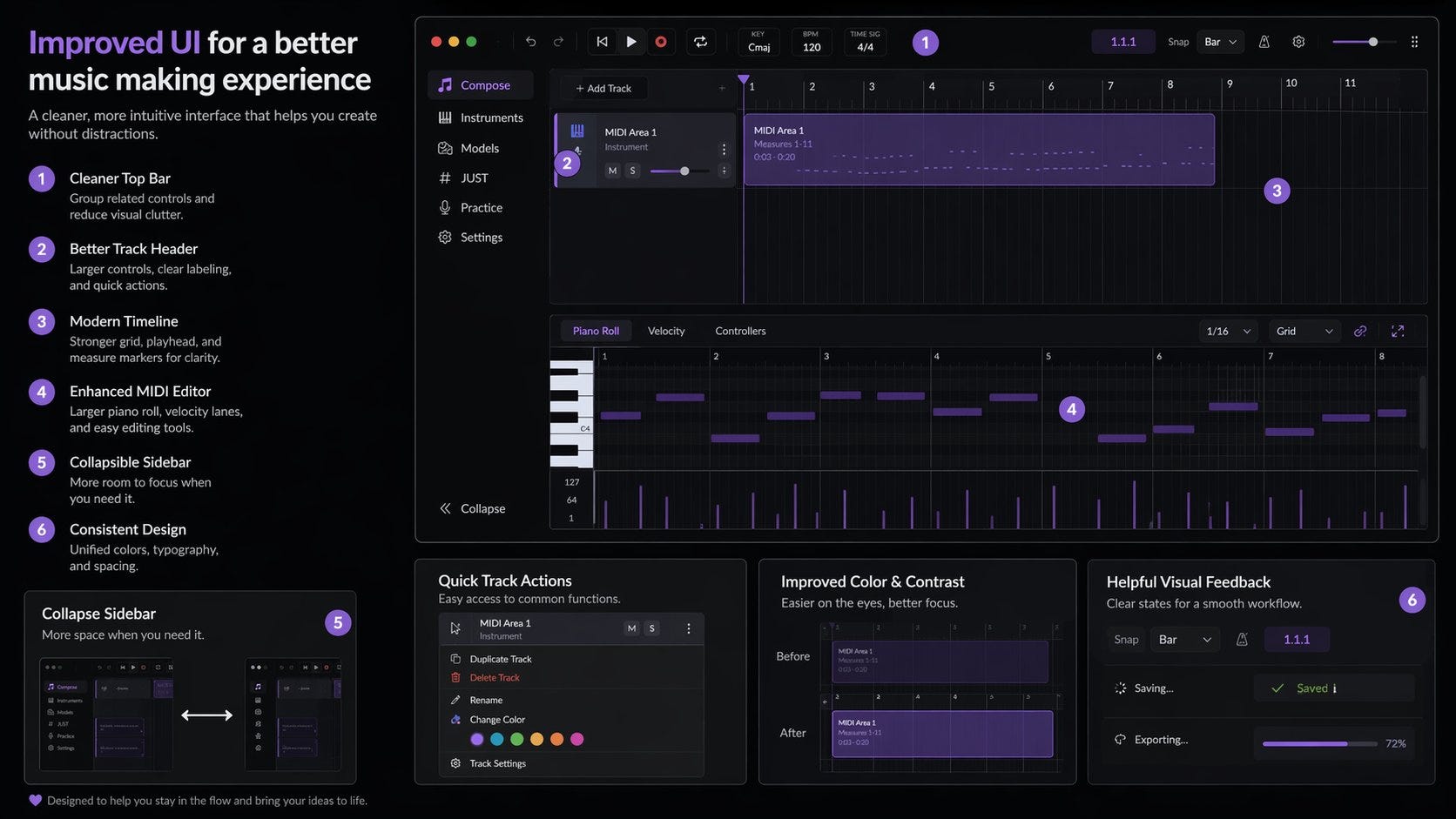
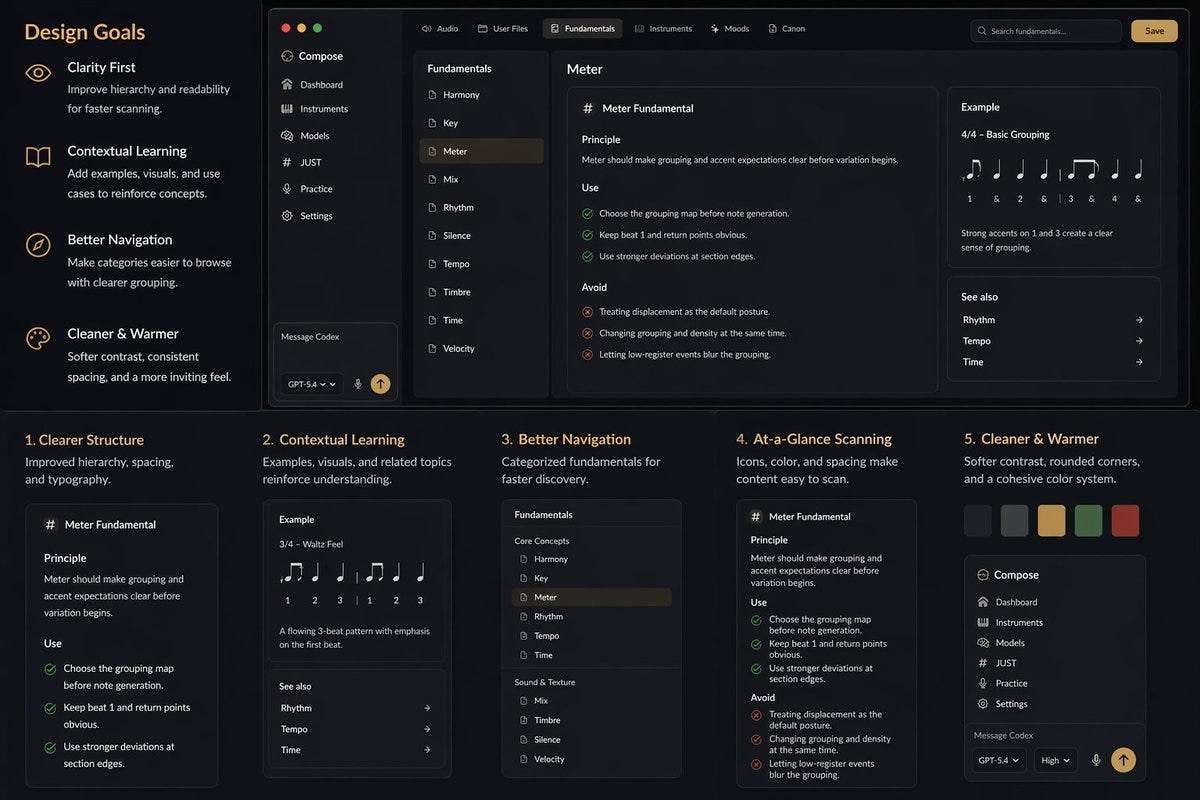
imagegen 2.0 - great insight on next steps.
similar to the turing test threshold we crossed some time back, a shift has happened that challenges how people talk about generative material. for years, musicians and other artists have already confronted these same arguments: real instruments, acoustic, or fake instruments, midi; real music performed live, or fake music recorded on albums. the language of the uncanny comes from that earlier phase, when synthetic material could almost pass but still gave itself away. now, especially around generated images and video, that shared distaste often gets collapsed into the word “slop.”
that word feels far too lazy for the extremely sophisticated systems that incredibly smart and cracked researchers and engineers are building at openai. i think there is plenty of room for debate and contradiction. there is even more room to be building and creating with all tools, past and present.